Bethune-Cookman is not easing into 2026. They open the season in Tampa at the USF-Rawlings Invitational with Illinois State, South Florida, Kansas, Michigan, and No. 6 Florida on the docket. That’s a quick way to find out if your offseason work translates, or if it just looked good in practice.
The bigger story, though, is roster reality. B-CU is basically starting over in a lot of spots.
Per the program’s own season-opening notes, the Wildcats are bringing in 17 freshmen, which is about 70% of the roster, and they’ll have to replace 62% of their RBI production from last season. Also, and this is the one that matters most on Saturdays, Sofia Vallejos-Coleman is the only returning pitcher.
So if you are looking for a clean 2026 thesis, it’s this: B-CU is going to win games if the new lineup grows up fast and if the pitching plan becomes something other than “please give us five decent innings.”
2025 baseline: better than the record, but not clean enough
Last year’s record was 23-31, with a 14-10 conference mark.
The team hit .277 with 8 home runs, scored 243 runs, and slugged .334.
Pitching finished at a 3.39 staff ERA, and opponents hit .273.
That’s the profile of a team that can compete in its league, but doesn’t separate enough in the margins to survive a full season without stretches of pain.
Also, the strikeout and walk numbers tell the story in plain language: B-CU’s pitching staff struck out 230 but also walked 149. Opponents struck out 166 and walked 156.
B-CU’s 2026 roster includes:
Emma Bradley-Tse (Sr., OF)
Jessica Alaan (Jr., 2B/INF)
Sofia Vallejos-Coleman (Jr., P)
Aysiah Gonzalez (R-Sr., INF/C)
Alana Cypress (So., OF)
Molly Blackwood (So., INF)
And the coaching staff listed on the roster page is Head Coach Laura Watten with assistants Jaimie Hoover and Shaelynn Braxton.
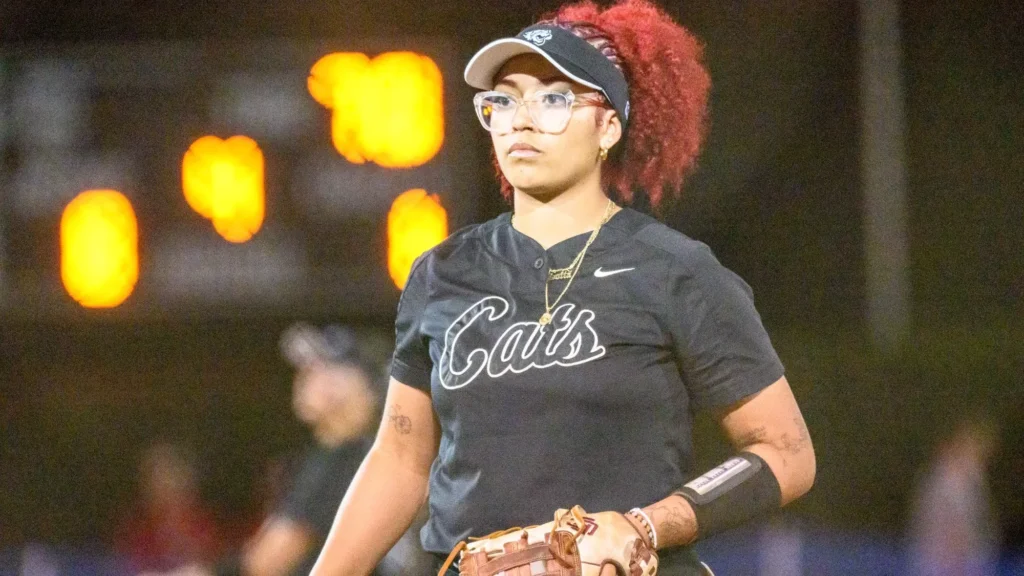
Bradley-Tse is the obvious name to lead with because the program notes she was named SWAC Preseason Second Team and she’s coming off a 2025 where she led the team in batting average and tied for the team lead in RBI.
If B-CU is going to be functional offensively early, it usually starts with an older bat setting the tone.
What B-CU is trying to be in 2026
This roster screams “new lineup, new roles, same expectations.”
Just look at the roster construction. B-CU has a lot of freshmen position players, plus several freshman arms listed (Brianna Casey, Mia Gonzalez, Malaiyha Galindo, Rebekah Mitchell).
That’s great for the future, but early season softball does not care about your future. It cares about who can throw strikes on Friday and who can take a real at-bat on Saturday.
The most important sentence from the season-opening notes was the blunt one: Vallejos-Coleman is the only returning pitcher.
So the 2026 pitching plan is going to be a mix of:
Vallejos-Coleman anchoring whatever stability exists
freshmen getting innings immediately
everyone learning what “college strike zone + college hitters” feels like in real time
And that might be messy in February. That’s not pessimism. That’s just how it works when you replace almost an entire staff.
The preseason league view: fourth in the East
The SWAC coaches and SIDs picked Bethune-Cookman fourth in the East Division in the preseason poll.
That placement makes sense for a team with this much turnover. It’s not a diss. It’s the league saying: we believe you can compete, but we need to see it before we hand you a seat at the top.
Schedule: early pain is guaranteed, but it’s useful pain
Again, B-CU opens with a heavy test at the USF-Rawlings Invitational, including a matchup with No. 6 Florida on Feb. 7.
That’s not about “upset watch.” That’s about evaluating whether your pitching can survive contact and whether your defense can hold up when the ball comes off the bat harder than it did in high school.
B-CU also released its broader 2026 schedule in late December, and it’s structured around getting to SWAC play with answers.
The SWAC Tournament is set for May 5–8 (May 9 if necessary) in Gulfport, Mississippi.
So your season arc is clear:
survive February and March while roles settle
get consistent by conference series
be playing your best ball in early May
Simple. Not easy.
Three things that decide whether B-CU climbs or drifts
1) Can they replace production without turning into a one-player lineup?
They have to replace 62% of last year’s RBI production.
That means someone besides the obvious returning vets has to become real run production. Not “nice contact.” Actual RBI at-bats with runners on.
2) Can the staff throw strikes, like, consistently?
In 2025, the staff walked 149 hitters.
In 2026, the staff is younger, and youth pitching almost always comes with free passes. If B-CU can keep walks from ballooning while the freshmen learn, they can stay in games long enough for the offense to matter.
3) Can Vallejos-Coleman be more than just “the returner”?
Last year she went 0-4 with a 4.98 ERA in 39.1 innings, per the season-opening notes.
That does not automatically predict 2026, but it does underline the need: she has to be a stabilizer. If she takes a step, the whole staff breathes easier. If she doesn’t, B-CU is basically asking freshmen to do everything.
Bottom line
Bethune-Cookman is going to look different immediately, because it is different. Seventeen freshmen is a roster reset, not a small tweak.
The upside is obvious: you can build something with that kind of youth and that kind of volume. The downside is also obvious: you’re going to take some lumps while it gels, and the schedule is happy to deliver them early.
If the freshmen contribute quickly, and the pitching staff can throw enough strikes to keep games playable, B-CU can outperform that fourth-place preseason slot and be a real factor by SWAC tournament time.
If not, you’ll still see effort and growth, but the wins will be harder to come by when you’re spotting opponents’ free bases and trying to score without last year’s RBI chunk.
Either way, you won’t have to guess what this team is. February is going to tell you, loudly.