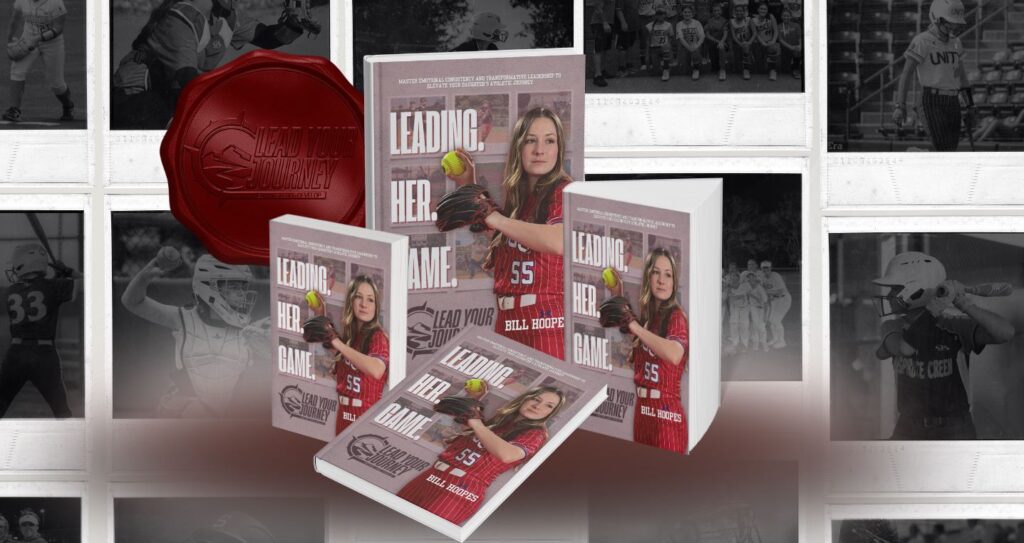
Fifteen years in the softball world can teach a person a lot about the game. It can also teach a person even more about people. For Bill Hoopes, author of Leading Her Game: Parents on a Purposeful Mission, that time brought lessons that stretched far beyond the field—lessons about leadership, emotional control, and the real meaning of support.
As a coach, Navy veteran, and father, Hoopes has seen every angle of the sport: the pressure-filled tournaments, the long weekends, the moments of triumph, and the tears that follow close behind. Yet what truly inspired him to write Leading Her Game was not any single dramatic event, but the slow realization that something was missing in how many parents approached the game.
“I made a million mistakes trying to connect with my daughter,” Hoopes admits. “She was a high-functioning perfectionist who wanted to be perfect in everything she did, not just for herself but for everyone around her.”
That struggle, and the process of researching, failing, and trying again, became the foundation of a new mission: to help parents regulate their own emotions, model composure, and become the example their daughters need most.
Finding Purpose in the Process
At the center of Leading Her Game is one powerful idea: every family needs a “why.” A softball schedule can swallow entire weekends and consume thousands of dollars, but when parents lead with purpose, every mile and every sacrifice begins to make sense.
A purposeful mission, Hoopes explains, means understanding what all this effort is really for. It means remembering that a daughter’s worth is not measured by batting average or exit velocity, but by her growth, her character, and her joy in the process. When parents root their actions in that perspective, they can guide with intention instead of reacting to every high and low.
It also means parents must model balance. “Be the thermostat, not the thermometer,” he says. “You set the tone, not the chaos.” In practice, that means keeping your cool after a strikeout, supporting effort over outcome, and creating an environment where athletes feel valued beyond performance.
The result is not just a more peaceful weekend. It is a stronger, more confident young woman who learns to lead her own life with purpose.
The Role Parents Often Forget
Ask any travel parent what they want for their daughter, and most will answer the same way: success, opportunity, happiness. Yet many lose sight of what that really requires.
Hoopes believes the most overlooked piece of parenting an athlete is consistency. Too many adults expect calm, disciplined, focused behavior from their daughters while showing the opposite when emotions rise. The real power of parenting, he argues, is in modeling what you expect.
“Hold her accountable for attitude and effort, not stats,” he says. “If she shows up, puts in the work, and gives her best, that’s success.”
This game, he adds, is shaping future women—leaders who will carry lessons from the diamond into their careers and relationships. The numbers will fade, but the character built through effort and resilience lasts forever.
Keeping Joy at the Center
In today’s world of year-round training and social-media comparison, softball can easily become a source of stress instead of joy. Parents often feel pressure to keep up, to chase scholarships, or to measure progress against others.
Hoopes urges families to return to the basics: celebrate attitude and effort. After a tournament, ask what went well before dissecting mistakes. Recognize the small wins—the early mornings, the extra reps, the moments of courage no one else noticed.
By focusing on progress and process, parents create space for growth. More importantly, they protect their daughters from burnout. “You’re not just raising a better athlete,” he explains. “You’re raising a stronger, more confident young woman.”
Support vs. Control
One of the book’s most powerful distinctions lies between supporting your daughter’s dream and living through her achievements.
True support begins with questions: What do you want? What are your goals? How can I help? It is about guiding and listening, not managing every detail. Living through her achievements, on the other hand, shifts the focus from her to you. That dynamic quietly adds pressure and can turn a shared journey into a strained one.
The healthiest families, Hoopes says, are those where the athlete feels safe to fail, free to grow, and confident that love is not conditional on performance. “When parents support instead of control,” he writes, “they teach their daughters how to dream big and chase it for the right reasons—because they love the game and the process.”
From Coach in the Stands to Anchor at Home
Every player knows the sound of a parent’s voice cutting through the fence during a close game. While well-intentioned, those moments often do more harm than good.
“No athlete needs another coach in the stands,” Hoopes explains. “They want to know you believe in them and are proud of them regardless of the outcome.”
The book challenges parents to become what he calls an “anchor at home.” Instead of directing, they provide steadiness. They are the calm voice after a tough inning, the reassurance that effort matters, and the reminder that love is not earned through stats.
When parents create that steady foundation, trust grows. As trust grows, effort increases, and performance naturally follows. The shift from control to calm support changes everything.
Softball as a Classroom for Life
Few environments teach resilience quite like softball. Failure is built into the game. Even the best hitters fail seven out of ten times.
“Softball teaches players that growth comes through mistakes and repetition,” Hoopes says. From missed catches to mental errors, every challenge becomes an opportunity to learn composure and self-belief.
To help parents reinforce those lessons, Leading Her Game introduces two frameworks: the 3R Method and the PIRE Method.
- 3R Method: Recognize, Regulate, Reinforce
- Recognize what is happening emotionally, both in your daughter and in yourself.
- Regulate your reactions by being the thermostat—steady and controlled instead of reactive.
- Reinforce the behaviors and attitudes that lead to growth rather than focusing only on results.
- PIRE Method: Parental Influence for Role Model Excellence
- Begin with self-analysis. Where are you mentally and emotionally?
- Demonstrate values through consistent action and tone.
- Align your behavior in every setting, from the bleachers to the dinner table.
- Build accountability with others who help you stay grounded.
When parents lead with these systems, they model the leadership they hope to see in their daughters. Over time, athletes naturally learn to handle adversity, communicate clearly, and lead with integrity both on and off the field.
Managing Perfectionism and Pressure
Many young athletes struggle with perfectionism. For girls, especially, that pressure can come from a desire to please coaches, parents, and teammates all at once. Hoopes teaches that most perfectionism is not rooted in the athlete herself but in the relationship dynamic around her.
When parents and coaches learn to regulate their own emotions, they remove the unspoken tension that often drives anxiety. The goal, he says, is alignment: your behavior should mirror what you want your daughter to display.
“If you want her calm under pressure, she must see you calm under pressure,” Hoopes explains. “If you want her to recover from mistakes, she needs to see you respond to disappointment with perspective, not panic.”
Through awareness and consistency, parents create the space for athletes to rediscover joy and freedom.
The Parent–Player–Coach Triad
One of the book’s most practical concepts is the Parent–Player–Coach Triad. Picture a triangle, where each side supports the others. When one side weakens, the structure tilts.
For parents, the key is to stay in their lane: focus on support, not strategy. Coaches handle development and direction. Players stand at the center, learning to communicate and self-advocate as they mature.
By age fourteen or fifteen, Hoopes believes athletes should begin leading their own conversations about playing time and performance. Parents can step in for safety or finances, but otherwise, letting the player speak fosters confidence and ownership.
“When all three sides communicate with respect and clarity, trust grows,” he says. “And when trust grows, everything else follows.”
Building Real Change
The results of these ideas are not theoretical. Hoopes has spent years mentoring athletes and families through his Lead Your Journey and Undefeated programs. Across those experiences, he has seen remarkable transformations.
Parents who once felt frustrated now approach the game with peace and perspective. Daughters who once feared mistakes now play with joy and confidence. “These are not quick fixes,” Hoopes emphasizes. “They are mindset and behavior changes that strengthen relationships in every direction—athlete, parent, and coach.”
Beyond the Book
Although Leading Her Game is written primarily for parents and coaches, its ripple effect reaches every player. When adults learn to communicate with patience and lead with consistency, young athletes feel emotionally safe. That safety builds trust, and trust fuels performance.
For players who want to take their growth further, Hoopes’ Lead Your Journey and Undefeated programs offer mentorship in mindset, performance, and leadership development. The book teaches adults how to lead better; the programs help athletes put those lessons into practice. Together, they bridge the gap between family, faith, and competition.
A Message to Every Softball Family
When asked what one piece of advice he would give to every softball mom or dad, Hoopes’ answer is simple and direct:
“Buy the book. Read it. Work through it. Apply it. Practice it. Understand it. If you do, you will build a stronger relationship with your daughter, and she will build a healthier relationship with the game.”
That advice captures the spirit of Leading Her Game. It is not about reinventing softball parenting—it is about refining it. It is about trading control for connection, pressure for purpose, and outcome obsession for growth.
For every parent pacing behind the fence or driving home after a long weekend, the message is clear: the real win is not in the trophy case. It is in the relationship you build, the confidence you nurture, and the young woman you help your daughter become.
About the Author
Bill Hoopes is a former U.S. Navy veteran, educator, and longtime softball coach who has worked with families and athletes across the country. Through his company Lead Your Journey, he delivers leadership programs, mentoring systems, and faith-based resources that equip parents, coaches, and athletes to communicate better, lead with integrity, and thrive beyond the game.
Readers can learn more about Leading Her Game and Bill Hoopes’ work at LeadYourJourney.com or purchase the book on Amazon.